China Initiates Series Production of Battery-Swapping Bulk Carriers
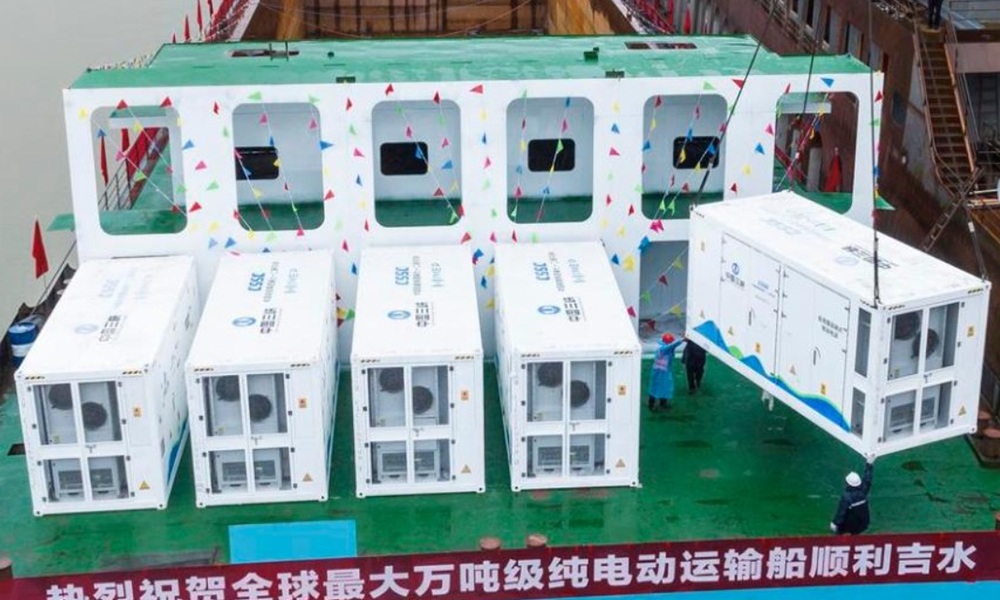
China is significantly advancing its electric shipping ambitions with a substantial order for 89 battery-swapping bulk carriers. This move, announced at a recent inland shipping forum in Wuhan, represents a strategic pivot from individual vessel demonstrations to systematic series production. The order encompasses a range of vessel sizes, including 29 units of 10,000 dwt, 20 of 5,000 dwt, and 40 of 3,000 dwt.
This development is crucial for vessel operators as it indicates a maturing technology and a commitment to scaling up electric propulsion for commercial shipping. The focus on battery swapping suggests a practical approach to managing charging times and infrastructure, potentially offering a viable alternative to traditional fuels for certain trade routes and vessel types. The sheer scale of the order implies that the underlying technology and operational models are becoming more robust and economically feasible.
For operators trading within or to European, UK, Mediterranean, Turkish, Black Sea, or Middle Eastern ports, this trend could eventually influence fleet composition and port infrastructure requirements. While the initial deployment is likely to be within China's extensive inland waterway network, the long-term implications for international shipping cannot be ignored. As battery technology improves and charging solutions become more widespread, similar initiatives could emerge globally, impacting emissions regulations and operational costs in these key maritime regions. "Taking its electric shipping drive from individual demonstration vessels towards series production."
Practical Takeaway: Vessel operators should monitor the operational performance and economic viability of these battery-swapping vessels as they enter service. Understanding the logistics and cost-effectiveness of battery swapping will be key to assessing future fleet decarbonisation strategies.