Top Ships Expands GSI MR Newbuilding Programme to 14 Vessels
Fleet Expansion and Specification Focus
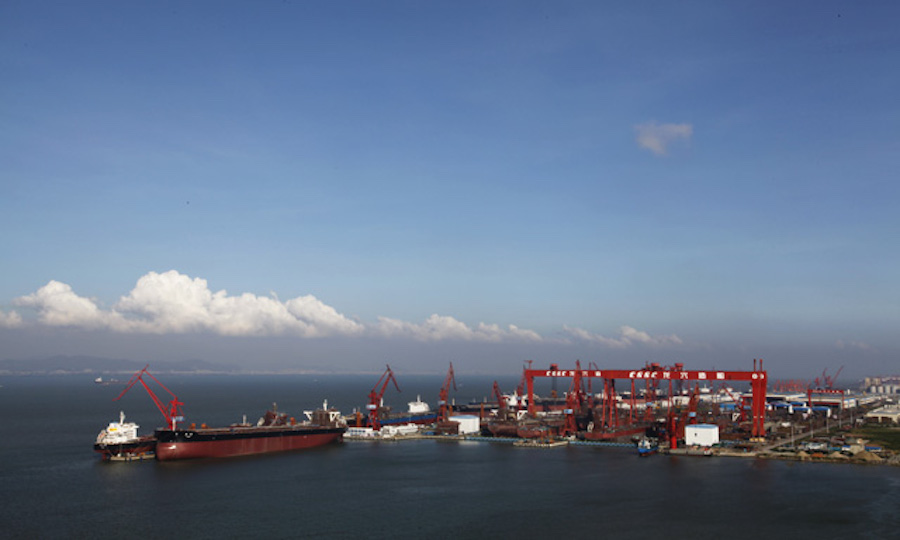
Evangelos Pistiolis-led Top Ships has extended its newbuilding commitment at Guangzhou Shipyard International (GSI) by acquiring four additional medium-range (MR) product tanker contracts. The transaction, executed through the acquisition of related-party special purpose companies, elevates the New York-listed Greek owner's total MR newbuilding pipeline at the yard to 14 units.
The vessels are specified at 50,000 dwt with eco-designs, installed exhaust gas cleaning systems (scrubbers), and Ice Class 1A notations, with scheduled deliveries extending the yard book.
Operational and Compliance Implications for Fleet Managers
For technical superintendents and fleet managers, large-scale intake of standardized eco and scrubber-fitted tonnage signals a continued industry pivot toward fuel flexibility and compliance readiness. The inclusion of Ice Class 1A notation is a critical design choice, indicating that these units are engineered for reinforced structural resilience and enhanced propulsion power in low-temperature and ice-affected environments. Fleet operators integrating similar specifications must factor in the operational profiles of scrubbers regarding regional discharge bans, alongside the maintenance demands of Ice Class scantlings and steering gear arrangements during upcoming drydock cycles.
Regional Trading Impacts
For vessels transiting or calling at ports in Northern Europe, the UK, the Mediterranean, Türkiye, and the Black Sea, deployment of Ice Class 1A product tankers provides distinct commercial and operational flexibility. In winter conditions across the Baltic, Northern European approaches, and the Black Sea—particularly northern terminals subject to seasonal freezing—Ice Class 1A tonnage mitigates delay risks imposed by icebreaker support requirements and port-specific navigation restrictions. Furthermore, these units remain well-suited for strict European emission control areas (ECAs), where scrubber operations must continually balance compliance with local port state environmental regulations regarding washwater discharge.
Practical Takeaway
Technical teams overseeing newbuilding handovers or preparing recently delivered eco-tankers for European and regional trades must audit scrubber washwater monitoring systems and verify that Ice Class operational limitations are clearly communicated to shipboard management teams.